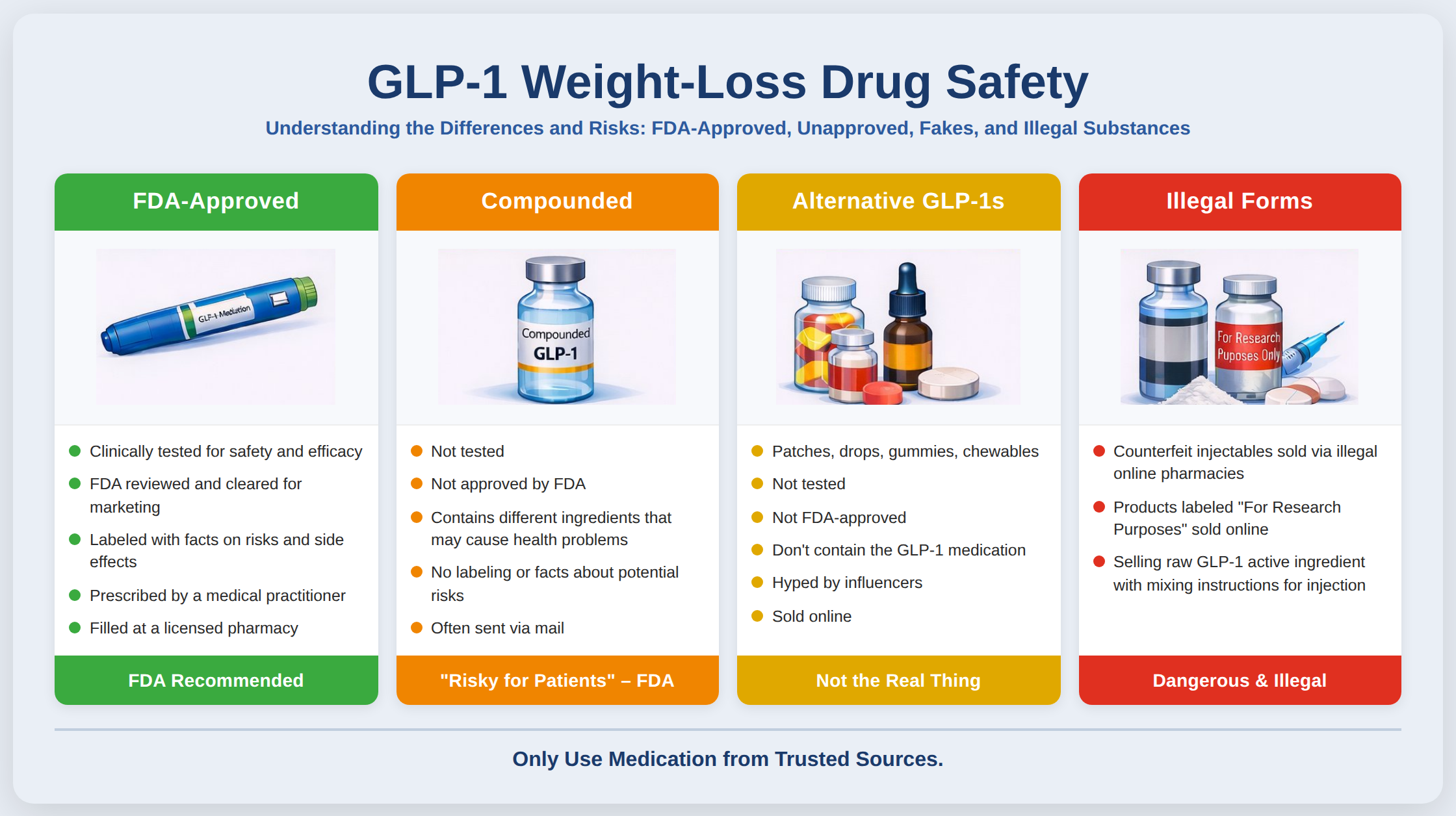
Research Limitations & Regulatory Status Critical Gaps in Current Evidence Despite robust Phase 3 clinical trial data, important limitations constrain the application of this research: Limited Long-Term Data The longest-duration trials extend only to 68 weeks (approximately 16 months): No multi-year safety data beyond approximately 18 months of treatment Weight maintenance following discontinuation insufficiently characterized for the combination Long-term cardiovascular outcomes not yet established through dedicated outcomes trials Durability of glycemic benefits in type 2 diabetes requiring longer follow-up Potential for tachyphylaxis or reduced efficacy over extended periods unstudied Safety Considerations While clinical trials established acceptable short-term safety, gaps remain: Gastrointestinal tolerability Nausea, vomiting, diarrhea, and constipation affected 79.6% of combination therapy participants versus 39.9% with placebo Pancreatitis risk Theoretical concern with GLP-1 agonists requiring ongoing surveillance Gallbladder complications Increased risk of gallstones and cholecystitis observed with rapid weight loss Thyroid considerations GLP-1 agonists carry thyroid C-cell tumor warnings from rodent studies Cardiovascular safety Comprehensive cardiovascular outcomes trials not yet completed for combination Population Diversity Limitations Research populations have important constraints: Limited pediatric data Safety and efficacy in individuals under 18 years not established Pregnancy and lactation No data in pregnant or breastfeeding women Severe renal impairment Limited data in advanced chronic kidney disease Elderly populations Participants over 75 years underrepresented in trials Mechanistic Understanding While the synergistic weight loss is clear, mechanistic details require further elucidation: Relative contribution of each component to total effect incompletely quantified Individual response prediction Factors determining exceptional versus typical response unknown Brain imaging studies Direct evidence of complementary neural pathway activation limited Dose optimization Whether alternative ratios might provide superior outcomes unexplored Regulatory & Competitive Sport Status FDA Position As of October 2025, the combination has not received FDA approval: Clinical development stage Currently in Phase 3 trials under Investigational New Drug applications Not commercially available Cannot be prescribed or dispensed for clinical use in the United States Compounding prohibited FDA explicitly prohibits compounding of cagrilintide, as it is not an approved active pharmaceutical ingredient Expected approval timeline Novo Nordisk has indicated planned regulatory submissions following completion of Phase 3 program Salt forms prohibited GLP1 sodium, GLP1 acetate, and cagrilintide salts cannot be legally compounded The FDA issued warning letters in December 2024 to companies marketing cagrilintide for human use, stating these products are unapproved new drugs introduced into interstate commerce in violation of federal law

Medical Advisor, Swiss Medica doctor Side effects of stem cell therapy for the treatment of Peyronies disease While stem cell therapy shows promise in treating PD, there are some risks associated with the Peyronies disease stem cell treatment, such as: Pain and discomfort at the injection site Temporary swelling and redness Light bruising around the injected area Risk of infection, as with any procedure involving injections Some serious risks associated with the disease can be: Immune response to the injected stem cells for Peyronies disease, leading to inflammation or rejection Allergic reactions to the preservatives used as stem cell medium Increased production of fibrosis due to improper administration during stem cell treatment for Peyronies disease Best stem cell therapy for Peyronies disease Theres no one Peyronies disease stem cell therapy thats considered the best yet
Uwaga: Kalkulator ma wycznie charakter edukacyjny i laboratoryjny
Morigny, P., Houssier, M., Mouisel, E
News Release March 25, 2010 Cholesterol-lowering supplements reviewed by ConsumerLab.com: Many pass quality testing, one fails